From the Japanese Calligraphy Workbook
Frame your kanji
The workbook ends with a sample page and three frame-ready pages. Cut one out, write your favorite kanji beside its model page, and hang it on your wall.
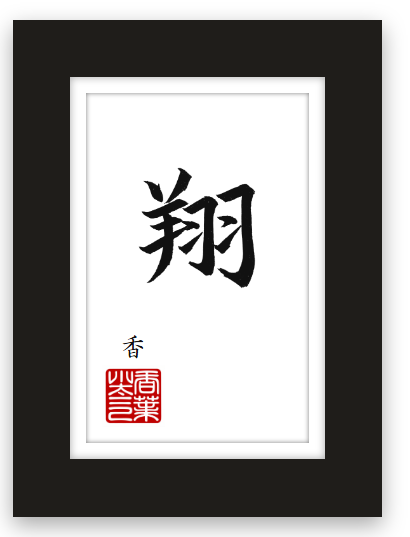
How it works
- Cut along the dotted lines first. The cut page is exactly 5 × 7 inches, the size of the frame. The back is blank, so you lose nothing. Now you can lay it flat beside the model page.
- Write it in the center. Nothing is printed where your kanji goes. The faint inner line shows the opening of the mat. About 5 cm (2 inches) looks great, and 8 cm (3 inches) is the largest size for this brush pen.
- Sign and stamp. Press your seal in the lower left corner, the way a painter signs a work, and write your name small just above it. Stay inside the faint line, so the mat doesn't cover them. The seal is the red stamp Japanese artists put on their work.
- Frame it. Use a 5 × 7 frame with a 4 × 6 mat. The mat hides the faint line.
What you'll need
The first three are examples from Amazon that fit the page. Similar products work too.
A 5 × 7 frame with a 4 × 6 mat
- A white or cream mat makes black ink stand out.
- A simple black or natural wood frame suits brush kanji.
- Acrylic instead of glass is lighter and safer.

A stone seal with your name
- In Japan, a calligrapher finishes a work with a small red seal called a rakkan-in. It carries the writer's name. Press it in the lower left corner of your page.
- You can order it with your name in katakana or kanji. For katakana, choose style J1 or J2.
- This one is about 1 inch (2.5 cm) wide. Smaller seals work too.
朱肉
Red seal ink (shuniku)
- The deep red ink used for seals in Japan.
- Press firmly and lift straight up.
- Let it dry a few minutes before framing.
筆
The brush pen we use
- Every kanji in the book was tested with a Kuretake brush pen (medium tip, water-based pigment ink).
- It dries in about 30 seconds.
- Use a fresh pen for your framed piece so the lines stay crisp.
As an Amazon Associate, kotamee earns from qualifying purchases.