From the Japanese Calligraphy Workbook
The brush pen we use
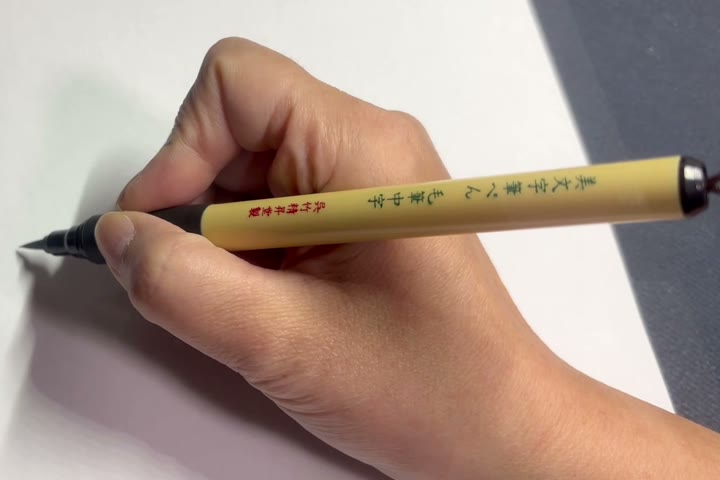
Every video was filmed with the same pen: a Kuretake brush pen with a medium tip and water-based pigment ink. You don't need an ink stone, a brush or special paper.
Kuretake Bimoji Fude Pen XT5 on Amazon →As an Amazon Associate, kotamee earns from qualifying purchases.
Why this pen
- A real brush tip. The tip bends and springs back like a brush, so you get thick and thin lines, the sharp stops and the sweeping ends you see in the videos.
- Quick-drying ink. In our test on copy paper it was dry in about 30 seconds and did not transfer to the facing page.
- Same pen as the videos. When your strokes look like the ones on screen, it's easier to see what to fix.
How to choose a brush pen
Look for a brush tip
- Choose a pen with a soft, flexible tip, not a hard felt tip.
- A medium tip is easiest for practice. A fine tip suits small kanji.
Black, quick-drying ink
- Pigment ink stays deep black and resists smudging.
- Let each page dry about 30 seconds before you close the book.
Hold it upright
- Keep the pen almost straight up and press lightly.
- Press a little harder to make a line thicker.
Replace it when it fades
- If lines turn gray or scratchy, it's time for a new pen.
- Use a fresh pen for a piece you want to frame. Frame your kanji →